
Journal / Design
The effect is easy. The art direction is the work.
Figma’s latest shader tools make expressive graphics more accessible. A distinctive identity still needs restraint.
What changed this week
Figma’s 1 September 2026 update adds publishing for generative plugins and shaders, animated and interactive effects, code access, and expanded MCP support. That brings experimentation and implementation closer together: an effect can be inspected and adapted instead of existing only in an exported reference video. The announcement also distinguishes community publishing from organization-specific distribution.
Give the effect a job
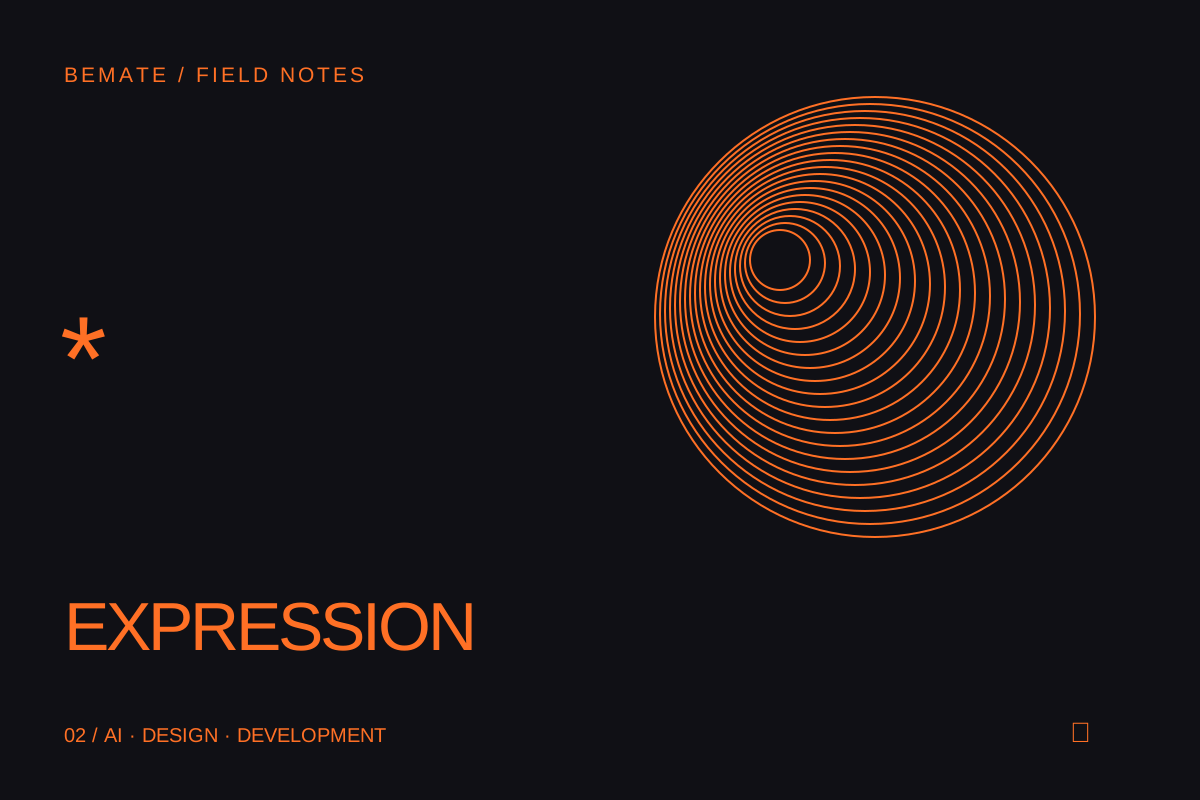
The creative opportunity is larger than another animated gradient. A visual rule can connect a brand’s typography, transitions, illustrations, and interactive surfaces. Before choosing distortion or particles, describe the behavior in plain language. Does it reveal structure, suggest momentum, or make a connection visible? If the answer is only that it looks impressive, the effect probably needs a clearer role.
Our take
Build a quiet version first. Then decide where interaction adds meaning, how the effect reads on a small screen, and what remains when motion is reduced. A useful handover includes the visual behavior, an implementation reference, and a static alternative. Tooling can shorten the distance between an experiment and a product, but it does not decide which experiments deserve to become part of the identity.
Put it into practice.
Choose one visual rule and apply it to three different surfaces. Keep the version that stays recognizable without needing to run continuously.
Sources & further reading
Editorial analysis by BEMATE. Sources reviewed 6 September 2026.